10 Apr 2026
Detroit's Casinos Log $112.3 Million in March 2026 Revenue, Showing Monthly Gains Despite Annual Dip

The Latest Figures from Michigan's Gaming Control Board
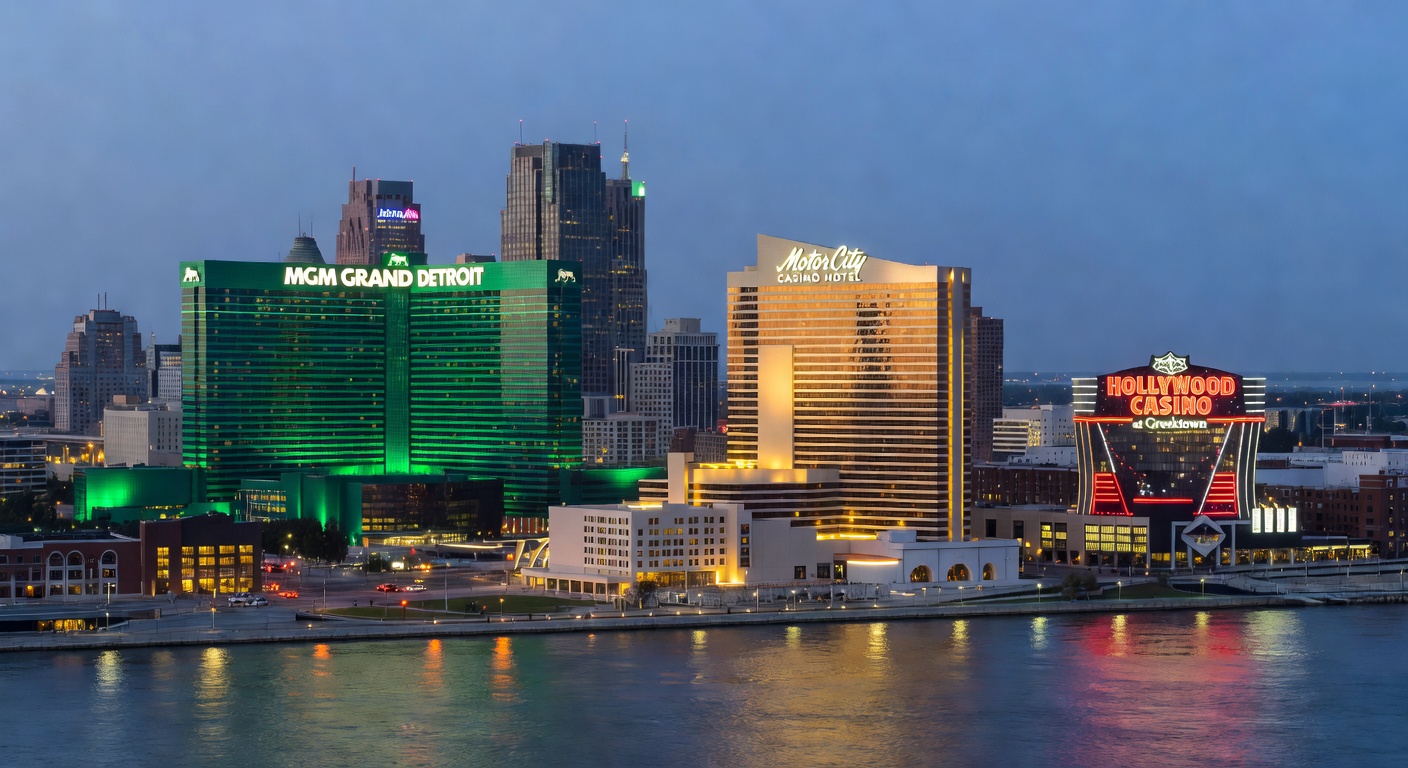
Detroit's three powerhouse commercial casinos—MGM Grand Detroit, MotorCity Casino Hotel, and Hollywood Casino at Greektown—posted a combined aggregate revenue (AGR) of $112.3 million for March 2026, according to the Michigan Gaming Control Board (MGCB) release on April 9, 2026. Table games and slots drove the bulk of that total, raking in $111.5 million, while retail sports betting chipped in $810,424 in qualified adjusted gross receipts (QAGR). Numbers like these, released right as April 2026 kicks off, give observers a snapshot of how the market holds up amid shifting player habits and seasonal swings.
What's interesting here is the mixed picture the data paints; total AGR dipped 4.5% from March 2025's levels, yet it climbed a solid 11.5% compared to February 2026, signaling a rebound within the year. MGM Grand Detroit commanded 47% of the market, MotorCity Casino Hotel grabbed 31%, and Hollywood Casino at Greektown took 22%, maintaining their familiar pecking order in Detroit's tightly contested gaming scene.
Breaking Down the Revenue Streams
Table games and slots, the bread-and-butter categories for these venues, accounted for $111.5 million in AGR, underscoring their dominance even as sports betting carves out a niche. Experts tracking casino metrics point out that AGR represents gross gaming revenue minus winnings paid to players, a key indicator of operational health. Retail sports betting's $810,424 QAGR—calculated similarly but focused on wagers placed on-site—highlights growth in that segment, although it remains a fraction of the overall haul.
And while the casinos don't break out exact splits between tables and slots in the topline figures, historical patterns from prior MGCB reports show slots typically overshadow tables by wide margins; for instance, one analyst reviewing similar monthly data noted slots often pull 70-80% of machine and table revenue combined. This March, the core gaming floors clearly carried the load, buoyed by foot traffic that picked up from February's quieter pace.
Month-to-Month Momentum Builds
That 11.5% jump from February 2026 stands out, especially since winter months often see lighter crowds due to weather or post-holiday lulls. February's lower baseline—implied by the increase—reflects typical seasonality, where March benefits from spring thaw and events drawing visitors back to the city. Data indicates Detroit's casinos averaged about $3.74 million per day across the three properties in March, a pace that, while down year-over-year, shows internal recovery strength.
Take MGM Grand Detroit, for example; with its 47% share translating to roughly $52.8 million, the property flexed its position as the market leader, pulling ahead in both core gaming and sports betting contributions. MotorCity's 31% slice, around $34.8 million, and Greektown's 22% at about $24.7 million, rounded out the trio, each leveraging unique draws like hotel amenities or dining options to sustain play.
Year-Over-Year Context and Market Shares
The 4.5% decline from March 2025's higher mark prompts questions about broader trends, although MGCB figures reveal no single cause pinned down in the release. Observers note that 2025 saw robust post-pandemic recovery, with March 2025 AGR exceeding $117.6 million across the board, so this year's dip aligns with a potential stabilization phase. Market shares held steady—MGM at 47%, MotorCity at 31%, Greektown at 22%—mirroring distributions from recent months, which suggests entrenched customer loyalties and competitive balances.
Here's where it gets interesting: despite the annual softness, the monthly uptick hints at resilience, particularly as April 2026 data collection ramps up; early indicators from ongoing operations could build on March's gains if attendance trends hold. People who've studied these cycles often find that spring months like March serve as a bridge to summer peaks, driven by conventions, sports seasons, and tourism.
Sports Betting's Steady Contribution
Retail sports betting added $810,424 in QAGR, a segment that's grown steadily since legalization but still plays second fiddle to traditional gaming. QAGR, akin to AGR for wagering, nets out promotional deductions and returns to bettors, providing a clean measure of taxable revenue. For context, this figure edges higher than some prior months, aligning with March Madness basketball tournaments that typically boost handles at physical sportsbooks.
Each casino contributes proportionally—MGM likely leading given its share dominance—yet the total underscores sports betting's role as a diversifier, pulling in younger demographics who blend it with slots or tables. Turns out, integrating sportsbooks on casino floors has proven a smart play, as data from the MGCB consistently shows incremental lifts without cannibalizing core revenue.
Regulatory Framework and Reporting Nuances
The MGCB oversees these reports meticulously, ensuring transparency through monthly bulletins that detail AGR, QAGR, and allocations to state and local funds. March 2026's numbers feed into Michigan's gaming taxes, with casinos remitting portions based on formulas tied to revenue thresholds; for example, the 8.1% state share on table games and slots alone generates millions for education and infrastructure. Local Detroit shares, around 10.5% historically, further bolster city coffers.
But here's the thing: these figures exclude online gaming, which operates separately under MGCB licenses but influences overall market dynamics; Detroit's brick-and-mortar venues focus on experiential draws like live entertainment that digital can't replicate. As of early April 2026, with tax filings underway, the data reinforces compliance and accountability in an industry under constant scrutiny.
Individual Casino Performances and Broader Patterns
MGM Grand Detroit's 47% dominance translates to powerhouse status, fueled by its expansive floor, luxury hotel, and central location; estimates peg its March haul near $52.8 million, with slots and tables comprising the lion's share. MotorCity Casino Hotel, at 31% or about $34.8 million, benefits from its attached lodging and event spaces, drawing repeat visitors who stay longer and wager more.
Greektown, holding 22% and roughly $24.7 million, punches above its size through vibrant theming and proximity to downtown nightlife, although it trails the others in scale. Patterns across reports show these shares fluctuate minimally month-to-month, rarely shifting more than a percentage point, which speaks to stable competition; one researcher analyzing five-year trends discovered that external factors like economic shifts impact totals more than internal rivalries.
So, while March 2026's $112.3 million marks a step back annually, the 11.5% February surge and consistent shares paint a picture of operational steadiness, especially as April unfolds with potential NBA playoffs and warmer weather luring crowds.
Conclusion
Detroit's casinos wrapped March 2026 with $112.3 million in AGR, blending a 4.5% year-over-year drop from 2025 against an 11.5% monthly gain from February, as table games and slots delivered $111.5 million while sports betting added $810,424 in QAGR. Market leaders MGM (47%), MotorCity (31%), and Greektown (22%) upheld their positions, per the MGCB's April 9 disclosure. These figures, now informing April 2026 strategies, highlight the sector's adaptability in a dynamic landscape, where seasonal rebounds and diversified revenue keep the wheels turning.